

Tiny size reference system
This page outlines an example of a Tiny size system designed for a single-family home. The system focuses on managing energy consumption, maximising the use of self-produced energy, and minimising overall costs. This house is equipped with two solar power plants, ground heating, an electricity meter, and sensors for weather, temperature, and humidity. It also includes household appliances with controllable loads, such as an electric vehicle charger and a water boiler. Additionally, the system is connected to the electricity grid and has access to market-based purchase and selling prices at 15-minute intervals via the internet.
Home automation system
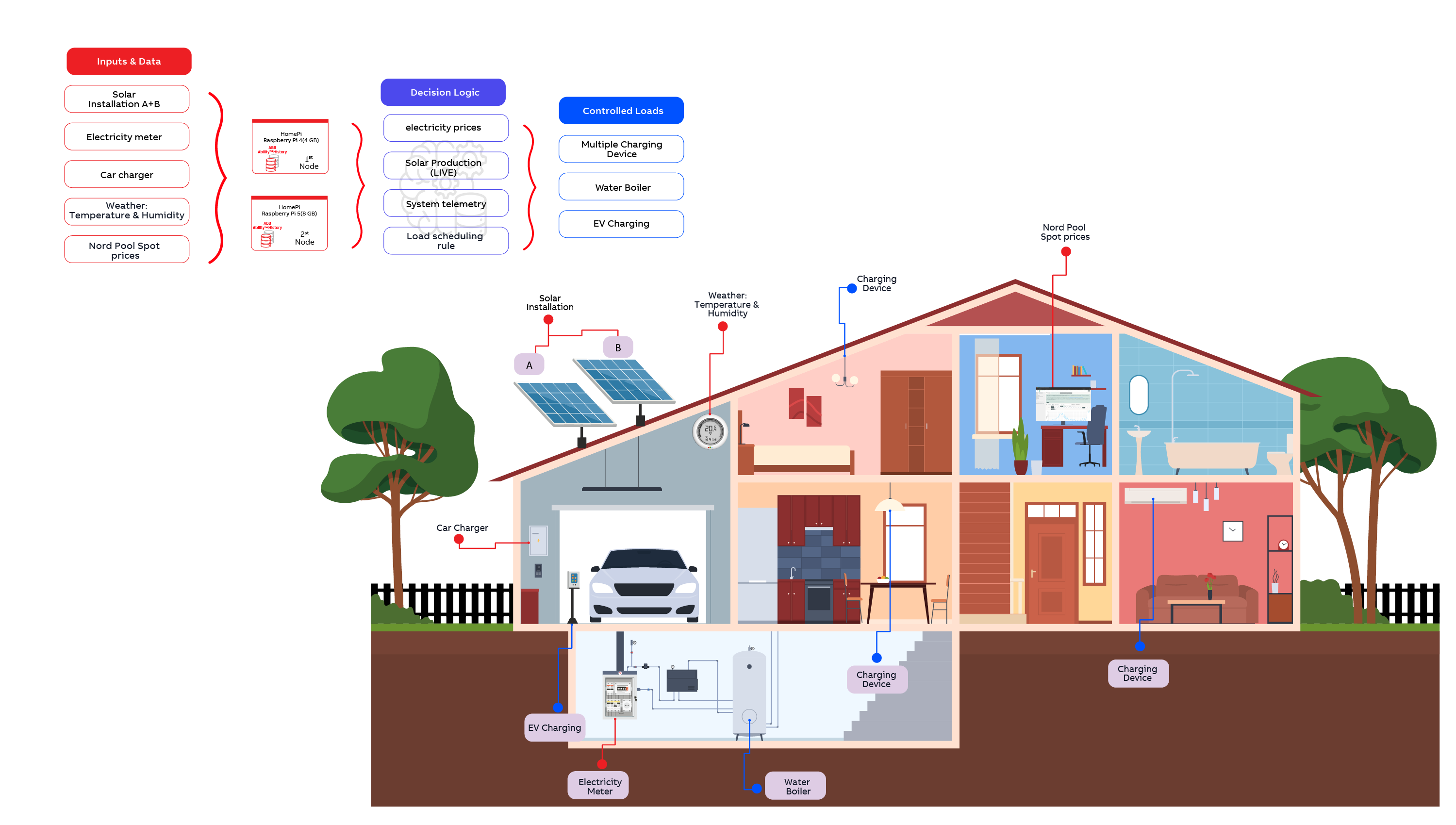
The system contains equipment models for devices, with data collection and calculations that together amount to about 2800 Variables. The total data ingestion load is less than 500 values/second. The received data is recorded and stored in the database for a lifetime; currently, there exists 10 years of historical data. Because the system is optimising energy consumption and controlling loads, it is configured with redundancy to ensure failure safety. Both nodes perform data collection, run the calculations and can control devices.
The following table outlines the specifications for the hardware setup of both Raspberry Pis in a redundant configuration.
| Tiny reference system | |
|---|---|
| CPU | 4 Core (Raspberry Pi 4, Broadcom BCM2711) |
| RAM | 4 GB |
| DISK | 256GB Transcend M.2 SSD (in SSK enclosure) |
| Power | Ethernet PoE splitter (Power over Ethernet) |
| OS | Arch Linux ARM (Both nodes) |
Resource consumptions
| Resource | Tiny reference system |
|---|---|
| Disk space consumption | 4 GB + 125 MB/day |
| Total CPU consumption | 6.4 % |
| RAM consumption | 1.1 GB |
| Disk load | 1.6 % (excluding backup) |
Updated 6 months ago